

This guide will help you choose the best AR lower receiver for your custom AR rifle or ARP. We’ll answer common questions about what makes a good lower, if expensive ones are worth the price, and which brands are considered the best.
First, what does the lower receiver even do?
Actually, the lower receiver is one of the least mechanically important parts of your rifle. Nothing violent happens inside it.
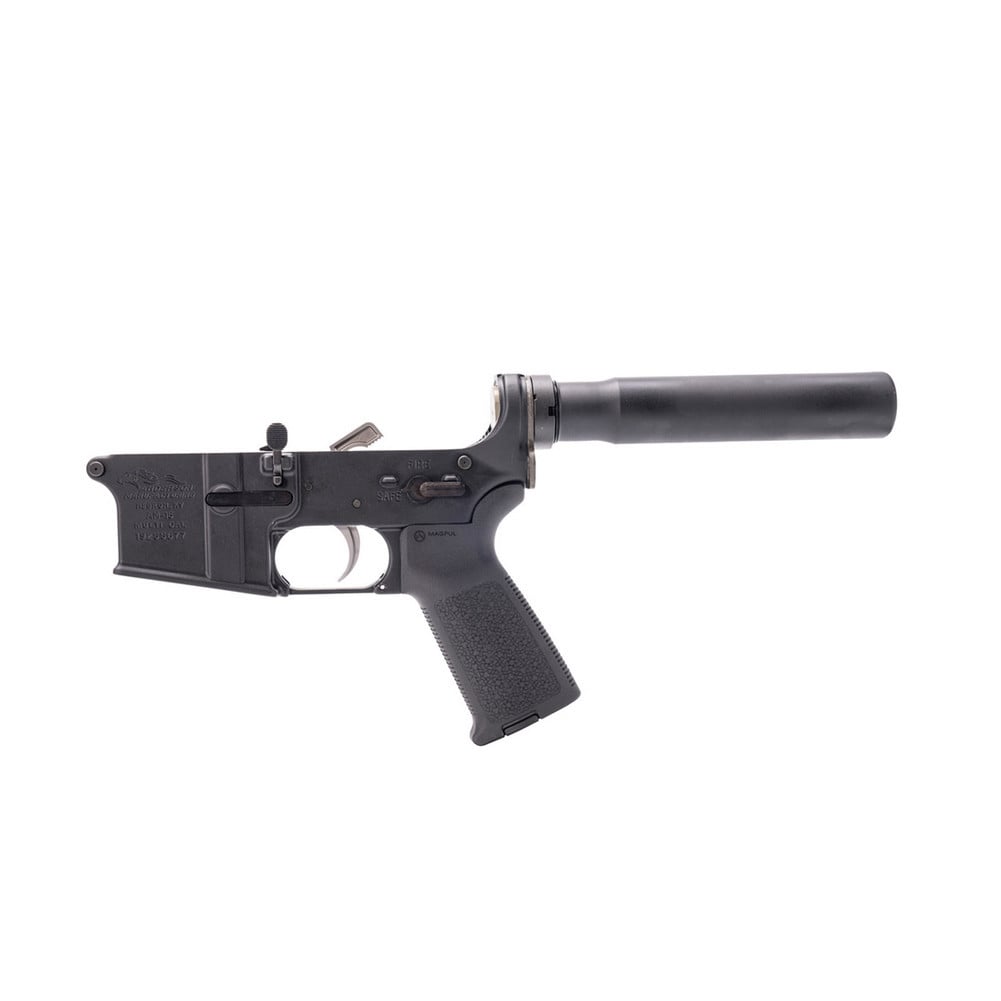
The upper is where all the action is – it holds the barrel, mounts your optic, houses the bolt carrier group, and absorbs basically all the explosive and impact forces when you touch off a round. The lower simply holds your fire control group (trigger, hammer, etc.), accepts your AR magazine, and gives the upper something to pin to. That’s it.
If you want a bare minimum, buy a sturdy in-spec lower and put the savings toward a quality barrel, BCG, and trigger – that’s where your money actually buys performance.
That said, there still are real reasons to spend more on a lower like ambidextrous controls, features for easier assembly, finish, etc.
7075 vs 6061
7075-T6 is the standard you want. It’s nearly twice as strong as 6061 in tensile and yield strength, with way better shear strength, for almost no weight penalty. 6061 is only slightly more corrosion-resistant and a touch cheaper. Not worth it. Price and brand don’t automatically guarantee 7075. Some makers still use 6061 for their lowers. Thousands of people run them without issue – again, because the upper takes the abuse – but check the spec before you buy if you want 7075.
Forged vs Billet
Forged lower means aluminum is hammered into shape under massive pressure, then machined. Strong, cheap, and the vast majority of mil-spec AR lowers are forged.
Billet lower is machined from a solid block of aluminum. Allows for fancier shapes, integrated features, and tighter custom tolerances – but sometimes needs more hand-fitting since there’s no true mil-spec for billet. Costs more.
Neither is “stronger” in any way that matters for a lower. Billet is about aesthetics and features. Forged is about value and proven compatibility. Avoid cast lowers.
Finish
Type III hardcoat anodizing (“mil-spec anodizing”) is what you want for durability. It’s the thickest, toughest option and comes in any color you like, from matte black to FDE to OD green.
The legal stuff (as of 2026)
- The lower is the serialized component. It must transfer through an FFL with a background check (Form 4473). Yes, even a stripped, non-functional lower.
- A lower first built as a rifle (16″+ barrel, 26″+ overall length) can’t legally be converted to a pistol or SBR.
- A virgin lower can go either way, while a pistol lower can bounce back and forth between pistol and rifle configs – just never combine a rifle stock with a short barrel without registering an SBR. (As of January 1, 2026, the $200 NFA tax stamp was eliminated for SBRs, suppressors, SBSs, and AOWs. You still have to register and get ATF approval via Form 1 – but the tax is gone, and eForm approvals are reportedly processing in days to weeks now.)
- Stripped lowers are neither until you build them.
80% lowers: An 80% lower is an unfinished block of aluminum or polymer—it’s not yet a firearm and requires drilling/machining to complete. Don’t confuse it with a stripped lower (which is already a finished, serialized firearm). The appeal of 80% lowers has dropped significantly since the 2022 rule, and several states (CA, CT, HI, NV, NJ, NY, RI, WA) restrict or ban them outright.
Restrictive states in general: If you live in CA, NY, NJ, MA, CT, IL, etc., research everything before you buy. Illinois effectively bans stripped lowers. California layers on featureless requirements and an 11% “sin tax” on complete firearms (which is partly why builders there used stripped Andersons – building can sidestep that tax). Your state can be way stricter than federal laws.
This isn’t legal advice – laws change constantly. Check your state and consult an FFL or attorney if you’re unsure.
Features to look for
Ambi controls
Full ambidextrous lowers are the biggest functional differentiator in the premium space. They’re not just for lefties; they let you run controls from either shoulder in tight spaces and keep operating if your dominant hand is compromised.
There are tiers:
- Basic: ambi safety only (increasingly standard on everything)
- Enhanced: add ambi mag release and/or bolt release
- Full: every control, including bolt catch (lock-back), works from both sides
Threaded/set-screw pins
Instead of hammering in fiddly roll pins (and risking scratching your finish), some lowers let you screw the bolt catch pin and takedown detent in with a hex key. Aero’s M4E1 popularized this; Seekins uses screw-in pins throughout. Massively easier assembly, especially after Cerakoting.
Tension screws
Even mil-spec lowers have a tolerance range, so mixing brands can give you a little wobble. Usually cosmetic, not a performance issue. Tension screws (found on Aero Precision lowers, for instance) allow you dial out the play.
Flared magwell
A beveled/funneled opening that makes slamming a fresh mag in faster and easier. Genuinely useful under stress.
Integrated trigger guard
Built into the receiver (common on billet lowers) instead of pinned on separately. Eliminates the risk of snapping off the aluminum “ears” during install.
Good AR lower receivers
Best overall value / best first build
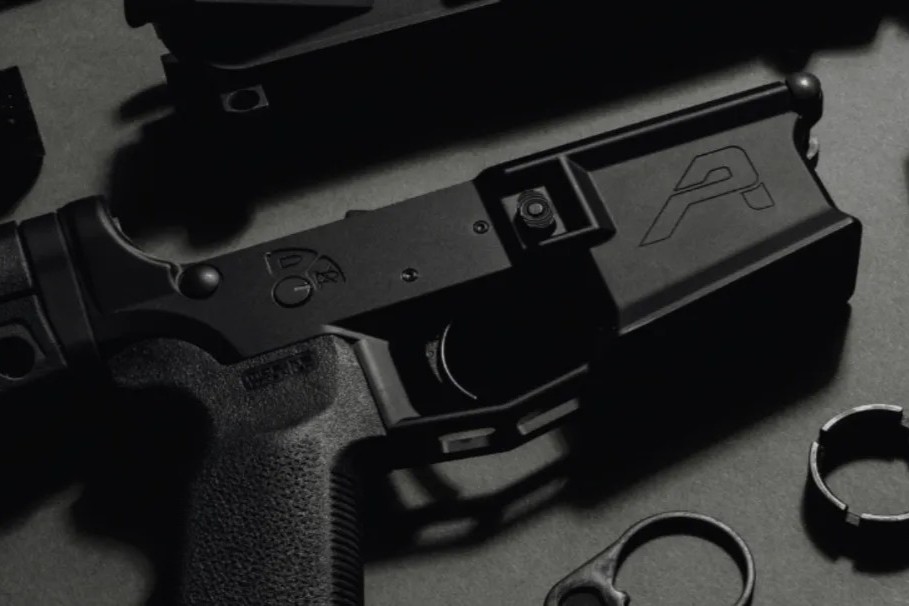
Aero Precision M4E1 – The most-recommended AR lower. It’s the de facto industry standard: forged 7075, flared magwell, integrated trigger guard, threaded bolt catch pin, optional tension screw, usually under $200 (stripped versions often $75–$100). Ideal for first-timers thanks to the builder-friendly features.
Honorable mentions: Ballistic Advantage offers the same features as the M4E1. PSA lowers run reliably for $30-75 and are a fantastic budget play.
Best fit, finish, precision
Noveske – Billet, flared magwell, tension screw, Type III anodizing, reinforcement behind the trigger guard. Tight tolerances and gorgeous finish. Pricey and hard to get, but it’s a benchmark for craftsmanship.
Warrior Systems WSM15 – Billet 7075, flared magwell, big trigger guard, threaded bolt catch pin. A bit heavier than ompetitors but worth it for the quality. Top tier for serious builds.
Battle Arms Development – Premium billet. Beautiful, strong, lightweight – but a complete BAD lower can cost as much as six or seven Aero forged lowers.
Best full-ambidextrous
Radian (ADAC / AX556) – The standout favorite. Its clever Ambidextrous Dual Action Control integrates the bolt catch into the mag release, plus an extended dual-action bolt catch that lets righties lock the bolt back without moving their firing hand. Innovative, polished, expensive. Slightly more potential failure points due to the integrated design, but proven reliable in practice.
LMT (MARS) – A true-ambi pioneer with an enlarged, easy-to-hit bolt catch. Premium pricing (~$600+ complete).
ADM (American Defense Mfg) – Excellent ergonomics with a switch-style bolt release.
LWRC / SilencerCo SCO-15 / CMT (Centurion) – All solid ambi options. The SCO-15 throws in built-in QD sling mounts, which is an underrated touch.
Griffin Armament MK 2 – near-full ambi features at ~$200 stripped, undercutting options like the Aero M4E1 Pro. If you want ambi without the premium tax, start here.
Specialty designs
Sharps Bros (Livewire / Jack / Samurai) – Sculpted mag wells. Forged from 7075, ambi bolt catch, flared magwell, integral trigger guard.
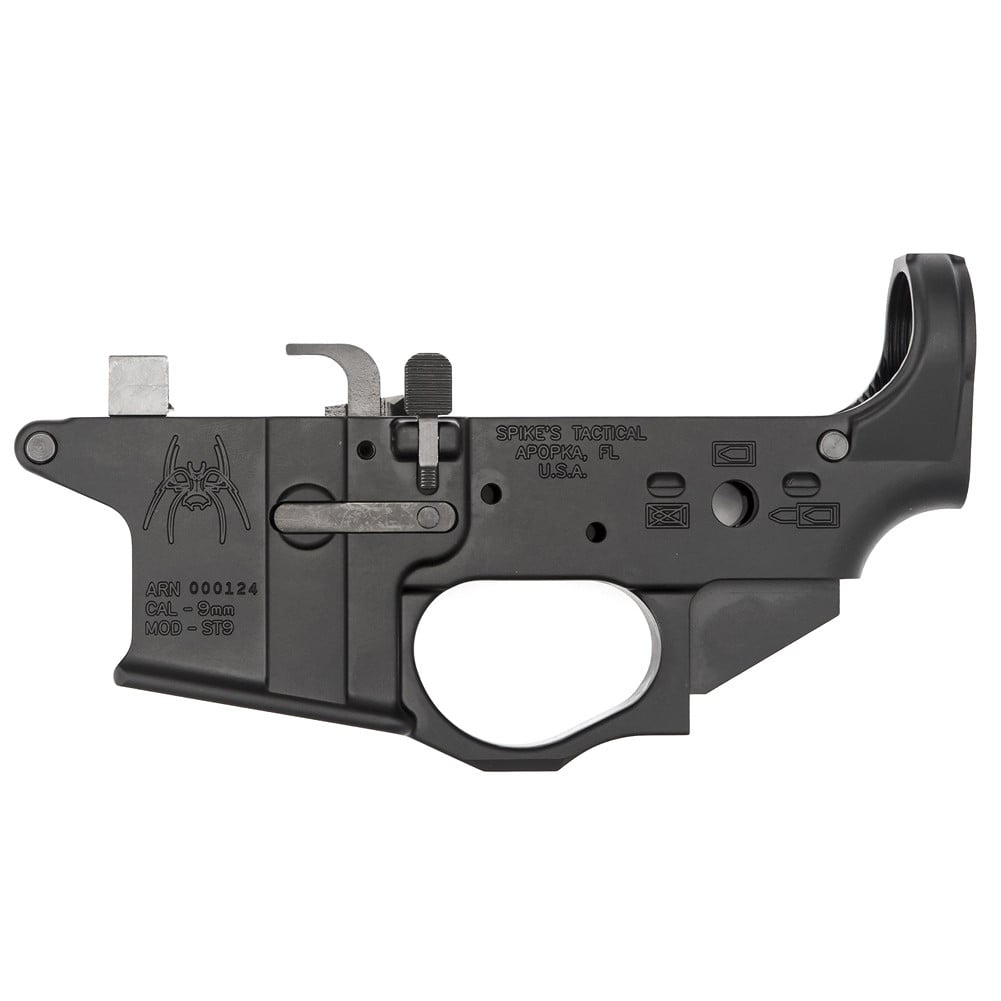
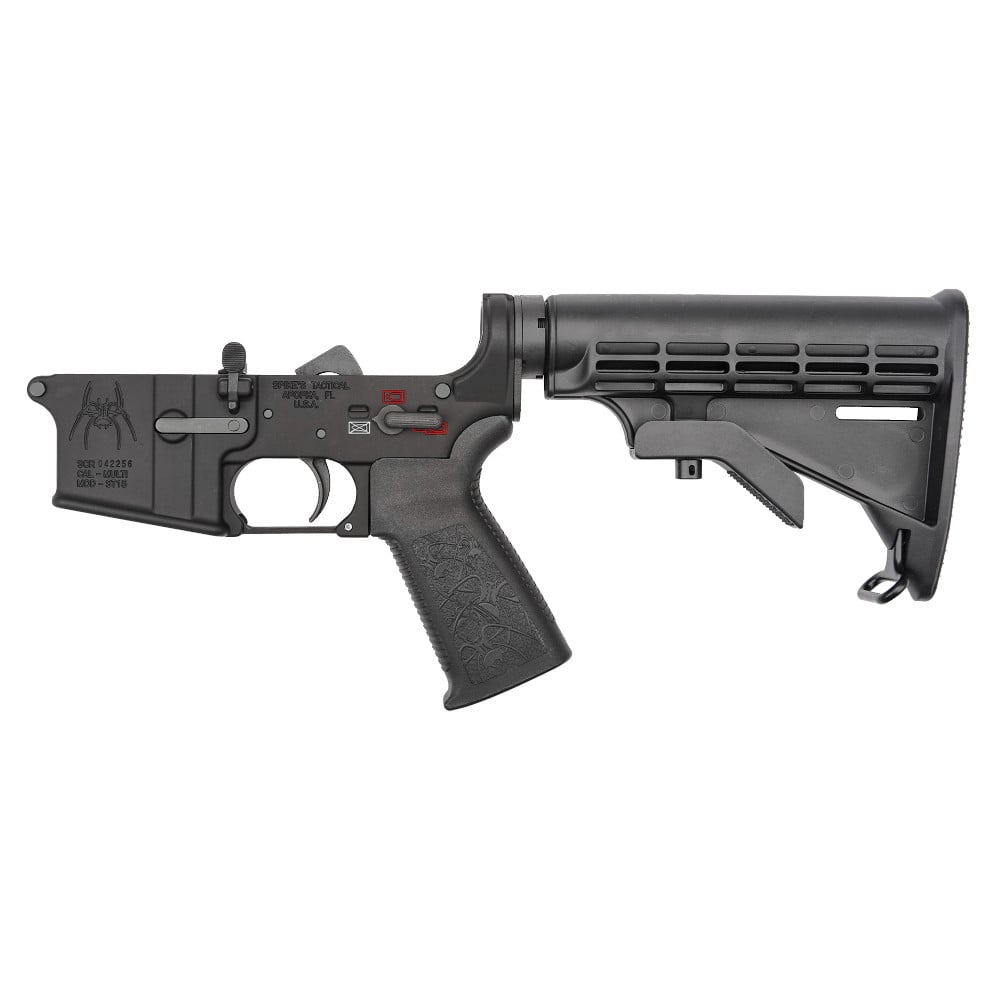
Spike’s Tactical – Affordable (~$150), widely available, themed roll marks (Spider, etc.), proven reliable.
Best for PCC (9mm)
Aero Precision EPC-9 – Purpose-built for Glock mags, flared magwell, threaded pins, integrated trigger guard. Note: it uses proprietary mag release/ejector parts.



Leave a Reply