
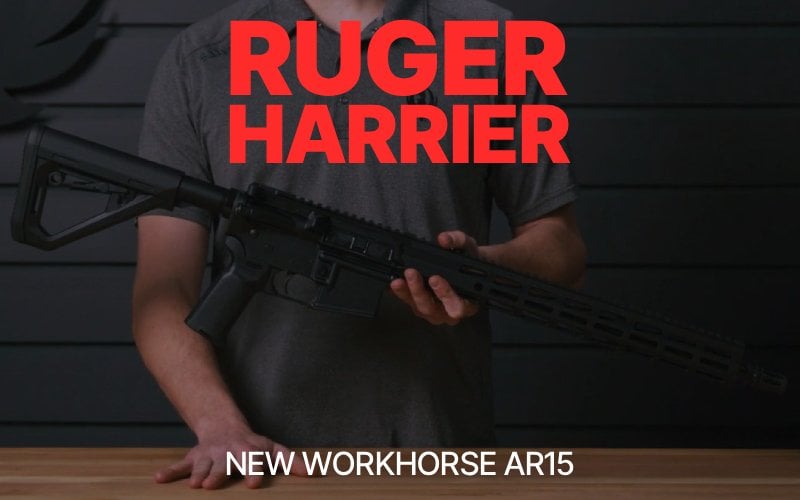
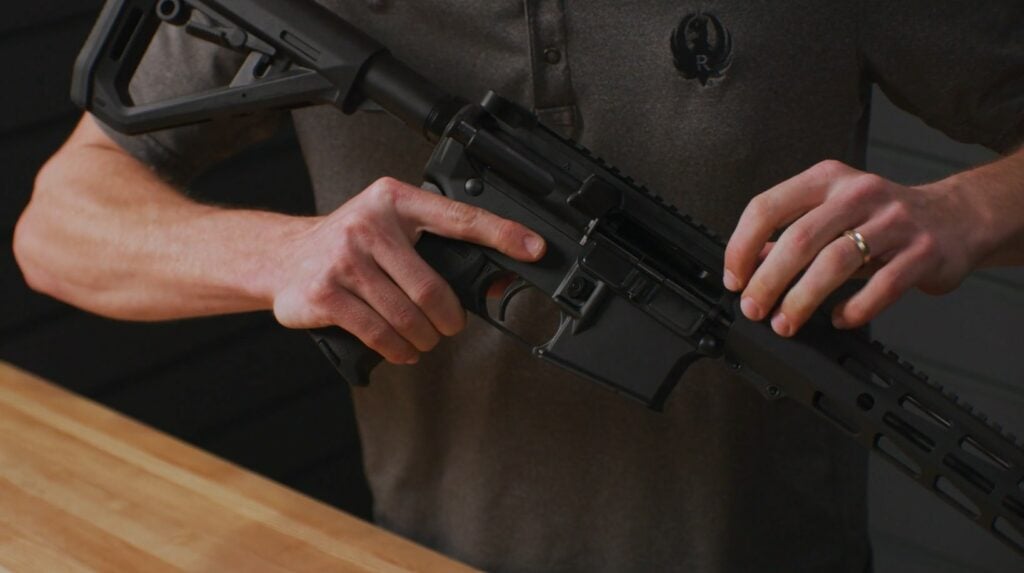
So, Ruger just dropped a brand new line of AR-15s right at the tail end of 2025. They’re calling it the Harrier, and it looks like this is the new entry-level model replacing the older AR-556.
If you’ve been watching the industry news, you know Ruger has been busy – specifically, buying up the Anderson Manufacturing facility in Hebron, Kentucky. Well, the Harrier is the first big fruit of that labor, and it looks like they are aiming squarely at the solid “do-it-all rifle” category. Here is an overview of what this new platform brings to the table.
The Two Variants of the Ruger Harrier
Ruger is launching with two main flavors, both chambered in 5.56 NATO with 16.1-inch barrels. You’ve got the Model 28601 (the standard setup) and the Model 28600 (the upgraded version).
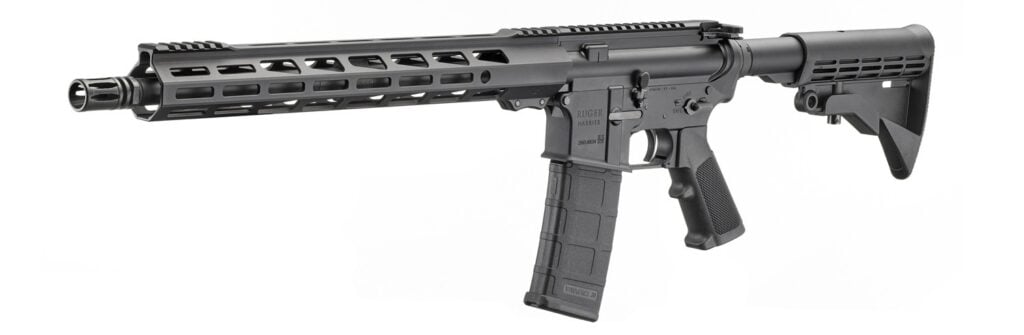
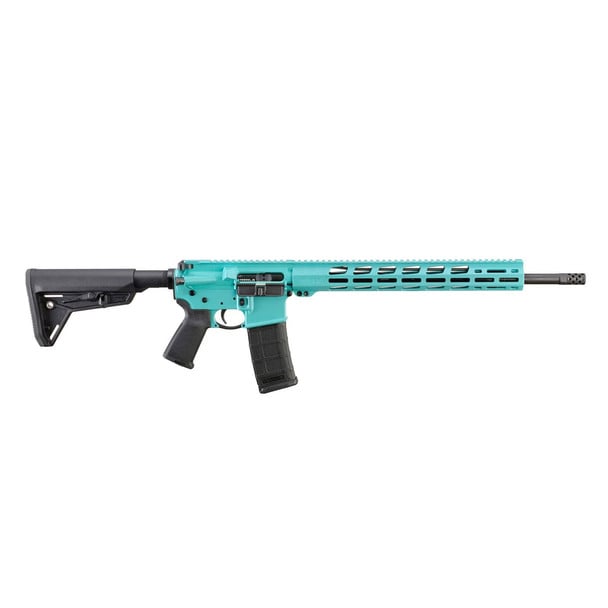
The Model 28601 ($699 MSRP): You get a sleek free-float handguard with M-LOK slots, but no full top rail – instead, the top rail is interrupted, with Pic slots at the front and back, but it’s smooth in the middle to save a little weight. This variant of the Ruger Harrier comes with standard furniture – classic A2 grip and M4 stock.
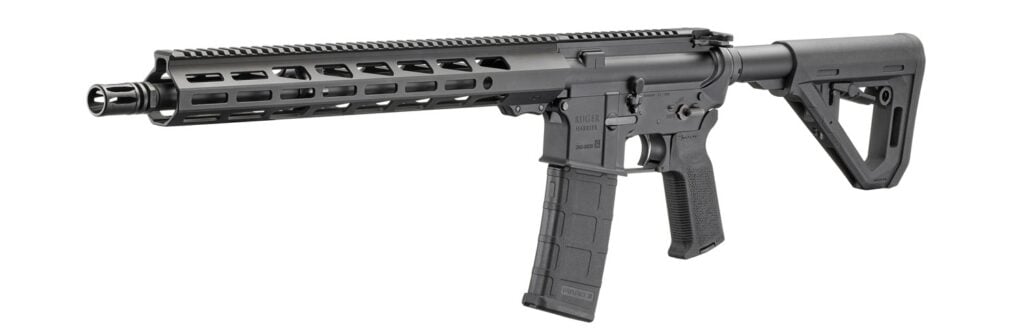
The Model 28600 ($749 MSRP): For just an extra $50, Ruger swaps in a Magpul MOE-K2 grip (which has that more vertical angle everyone loves these days) and a Magpul DT Carbine stock. Plus, you get a full-length Picatinny top rail and a mid-length gas system, which generally offers a smoother recoil impulse and less wear on parts compared to the snappier carbine length.
Under the Hood
Regardless of which version you grab, the core specs are the same. Ruger is using forged 7075 aluminum for the upper and lower receivers with a Type III hard-coat anodized finish.
One cool little detail Ruger added is a tension screw in the lower receiver. This allows you to tighten up the fit between the upper and lower. Does it change accuracy? Maybe not drastically, but it makes the rifle feel solid, no rattle.
For the barrel, they went with a 16.1-inch government profile made from 4140 chrome-moly steel with a nitride finish, not CHF. It’s a 1:8 twist rate, which is a great middle-ground that stabilizes everything from cheap 55-grain range ammo up to heavier 77-grain defense loads.
Also, good news for anyone who hates radial muzzle brakes: Ruger went back to the classic A2 flash hider. It just works, and it doesn’t blast the person standing next to you at the range.
RUGER AR-556 MPR Rifle
$819.99
Price accurate at time of writing
- Action: Semi-Automatic
- Caliber: 5.56x45mm NATO
- Barrel length: 18"
- Capacity: 30rd
- Twist rate: 1:8" RH
- Thread: 1/2"-28
- Weight: 6.8 lbs
Harrier vs AR 556
The Ruger MPR had an 18-inch barrel with a rifle-length gas system and that sweet two-stage Elite 452 trigger. The Harrier ships with a standard single-stage GI trigger.
Against the standard Ruger AR-556, the Harrier brings free-float M-LOK handguards, nitride finish, and better furniture for significantly less money.
The Verdict
So, who is the Ruger Harrier AR-15 rifle for?
If you are the type of person who loves building rifles from stripped receivers and hunting down deals on specific parts, the Harrier might not be for you. You can probably piece together something specific to your tastes for similar money if you have the tools and the patience.
But for the person who wants a rifle that is ready to go, backed by a major manufacturer’s customer service, the Harrier is a solid play. It sits right in that sweet spot competing with Smith & Wesson and PSA.
It’s a functional AR. If you’re going to buy one, you’d better opt for that mid-length gas system on the Magpul version.


Leave a Reply